Easton Bell Sports: Now That’s Customer Service

Entrepreneurship, Health

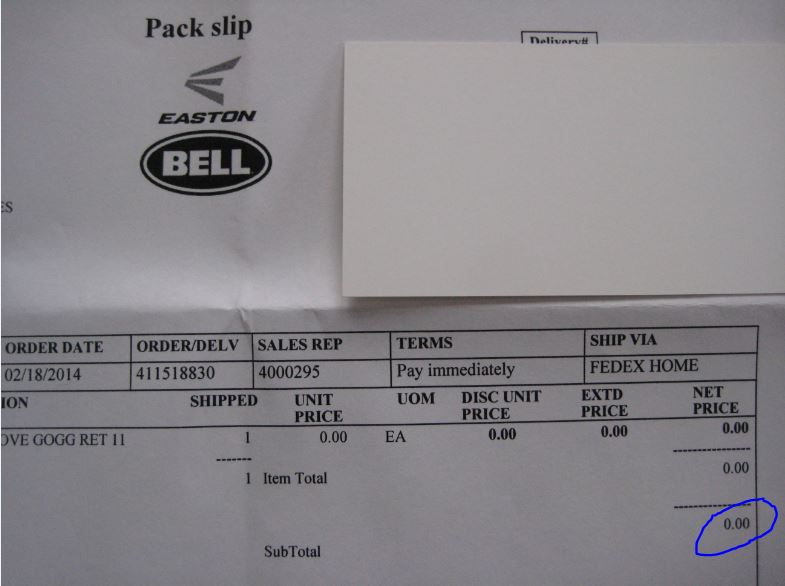
Easton Bell $0.00 highlighted

Just wanted to send out some well-deserved praise for a company with excellent customer service.

Last December I damaged my Giro snowboard helmet.  I bent the metal snap of the goggle strap on the rear of the helmet.  (I mean the strap at the rear that clamps down over the strap of ski goggles).  After unsnapping the strap to remove my goggles, I found I could no longer close the snap.

I use this snowboard helmet for winter cycling.  As I don’t have a car, I need it on a daily basis.  This was an especially cold winter here in Madison.  I generally switch from wraparound glasses to ski goggles below 15°F.  While I don’t use goggles everyday, this is Wisconsin!

So, I emailed Giro, asking where I could buy the replacement parts.  I wasn’t optimistic.  In this age of disposable products and terrible customer service (I’m looking at you, AT&T, major airlines, Chase Bank, etc.), I half-expected to be told there are no replacement parts, if I were to be answered, at all.

They actually got back to me the very next day.  It was Customer Service Rep Amber Thomas, from Easton-Bell Sports, the parent company of Giro.  She said she would put the replacement strap in the mail, and I should receive it by the end of the week.  Sure enough, the strap arrived two days later.  I was thrilled to be able to use my goggles the rest of the season, without having to buy a brand new helmet.

(For those of you who say you don’t need the helmet strap to use goggles:  while running errands around town on my bike, I’m constantly removing my goggles and putting them back on.  This is much, much simpler to do with your helmet’s goggle strap latched to your goggles, as if the goggles were an integrated part of your helmet.)

When I wrote Amber back expressing my gratitude, she replied, “We just want you to have a fully functioning helmet.”

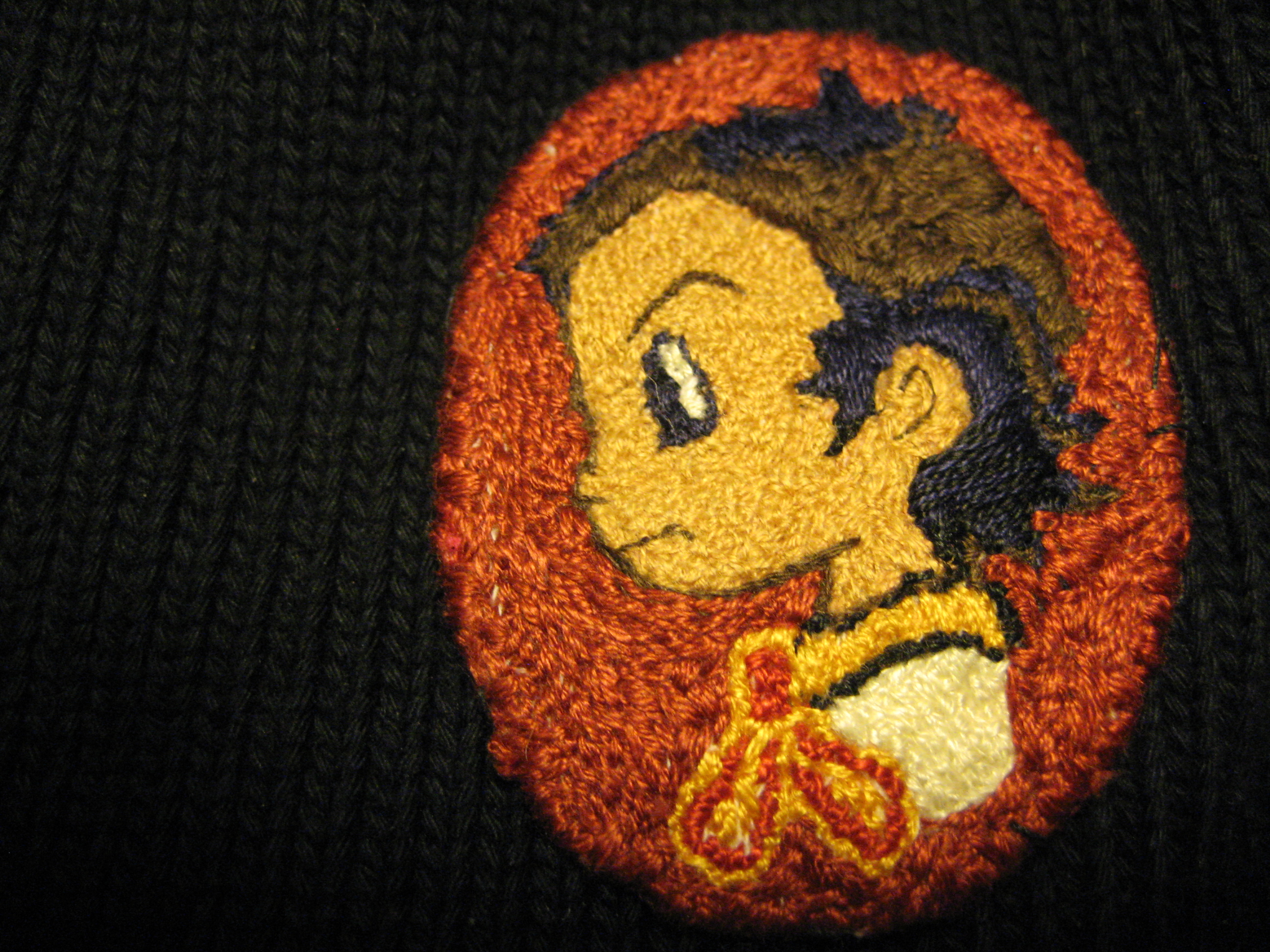
What you’re looking at in the image above is the packing list that arrived with the replacement parts.  Notice the figures listed in the “price” columns.  That’s right, “$0.00”

But, wait.  There’s more.

Several years back, I had a great little micro-light for the top of my skating helmet.  This was back in Houston, where the heat and humidity made Rollerblading at night the natural choice.  You need a light to skate at night, obviously.  Some of you may know this micro-light I’m referring to, called The Flea, by Blackburn.  They still make the Flea, but back then the Flea charged off of any battery via a little charging device.  My charger had a wire break loose.  I emailed Blackburn about it.  Same as with my helmet, Easton-Bell Sports, the parent company of Blackburn, sent me a replacement charger at no cost.

We’re talking a company with nearly $1 billion in annual revenue.  So how do they succeed while giving away equipment at no charge?  By making lifelong customers like me.  That’s how.

Just FYI, after selling one of its several manufacturing divisions, the company has recently rebranded itself as BRG Sports.

Beer Roundup #8: Three American Barleywines

Food and Drink

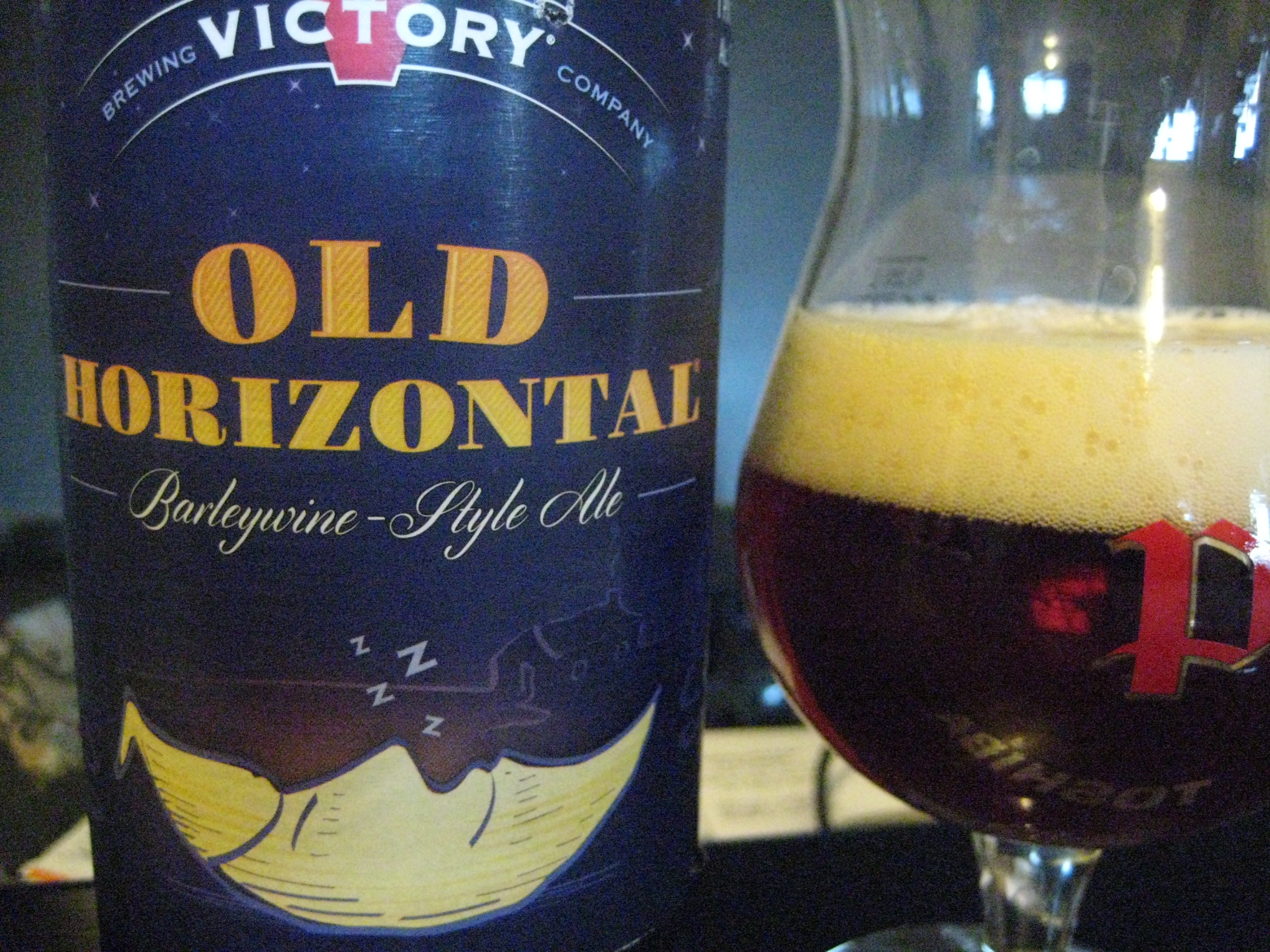
Old Horizontal - Victory

To Buy or Not to Buy?

1 = horrible
2 = bad
3 = average
3.5 = good (many better beers out there; won’t buy this again)
4 = very good
4.5 = great
5 = rare best


A Note on the Style:  American Barleywine

(This style note is essentially the same as the one from my post “Beer Roundup #7:  Three Midwest English Barleywines.”)

American breweries produce both types of barleywine, the malty “English” style and the hoppy “American” style.  As I’m more of a malt guy, I prefer the sweeter English style.  The hoppy American style comes with hop bitterness to rival even the most mouth-puckering IPA.    All barleywines have a stiff malt backbone and generous sweetness, but the hop-forward American-style is often so bitter as to be indistinguishable from a high-alcohol double IPA.  Don’t get me wrong, some of my best friends are double IPA’s; I love me a double IPA when it’s got intense sweetness to offset the high IBU, like Bell’s Hopslam, Dogfish Head 120 Minute, or Dark Horse Double Crooked Tree.  Same with American barleywines:  as long as it’s both bitter and sweet, it’s got my attention.

Bigfoot, Sierra Nevada Brewing Co.
Rating:  4.39 / 5
12 oz. bottle (4-pk), 10.2% abv, 73 IBU.

A glinting copper pour into a tulip glass, with an inch of off-white fluffy head that plasters lace on the glass.

The syrupy viscous feel in the mouth is too wonderful not to mention first. The first sip comes with a short-lived sugar sweetness. Then bitter grapefruit renders the sugar a memory. The citrus morphs to tarry pine. Whoa, this brew is too bitter. I immediately want to throw this in the cellar to teach it some manners.  That said, there is a secondary sweetness that calls out from the bitter abyss, alluding to a caramel malt sweetness that’s promised with a year or two of cellar aging. But the spicy alcohol heat teams up with the bitter hops to silence such rumors.

Stepping back to take in the aroma, a pungent honey and ripe melon seem to confirm the ghost of the sweetness. As the glass warms, the bloated bitterness deflates a bit, and a moist, grainy bread emerges, allowing that original simple syrup sugar to creep back into the room.

Rough-edged and impressively huge, like Greenflash Barleywine, this brew lacks the balance and polish of my favorite American barley wines:  Bell’s Third Coast Old Ale and Alaskan Barley Wine.

Beer Line, Lakefront Brewery
Rating:  3.96/5
12-oz. bottle (4-pk), 12.5% abv, 52 IBU.

Sticky, two-finger creamy head and lacing. Rouge-brown amber fluid.

My least favorite beer aroma hits the nose first:  leather. Milky rice pudding and wonder bread make up the malt bill. Brown sugar and vanilla, plus a mild booziness.  Very little hop bitterness in the aroma.

In the mouth the leather greets the palate, first, unfortunately. There’s a waterlogged driftwood that seems wedded to a chocolate-toffee sweetness and a nice estery burn.  Finishes with a loamy top-soil earthiness and a floral bitterness.

Medium- to full-bodied. Creamy and slick, a sticky, bitter finish.

This afternoon I was overly impulsive, buying two 4-packs of this brew.  Perhaps my judgment was clouded by the joyous memory of two recent Midwest barleywine discoveries:  1) just last month I cellared three four-packs of the enviable Stevens Point Whole Hog Barleywine (Wisconsin); and, 2) last month I was floored by Schell’s Stag Series BW (Minnesota), on tap at Mason Lounge.  Those two are a cut above this Beer Line barleywine (Wisconsin).  I don’t think I’ll be buying anymore of this one.  (Going by my ratings system, 4.0 is the cutoff point for purchasing any beer again.

Still, this is a fairly delicious barleywine, more English-style than American. I’ll throw the remaining seven bottles in the cellar.  Maybe a year might do good things, especially with the 12.5% ABV.

Old Horizontal, Victory Brewing Company
Rating:  4.41 / 5
22-oz. bottle, 11% abv, [85] IBU (estim.)

A bomber poured into a tulip glass creates a seriously handsome, ruddy copper glass of beer. It’s topped by a finger of fluffy off-white head that stays and stays, with sticky lacing.

Hoppy aroma, though quietly so.  An indeterminate spiciness.  Sweet grain. The alcohol is present.

Flavor in the mouth opens with sweet bread and red wine, plus a spicy alcohol.  Becomes instantly bitter from the citrusy hops, which dominate through the middle palate and onward through the finish. The sweetness rings as an echo on the backend, though sweetness here is refracted by the intense, white-grapefruit bitterness.

A medium- to full-bodied, luxurious mouthfeel, with a lively carbonation.

Classic American barley wine, very much like Bigfoot, though even bigger (except for the aroma). Intensely hoppy and spicy. The one drawback might be the near eclipse of malt sweetness by the tannic wine and citric bitterness. Nothing a bit of cellaring won’t cure.

Beautiful New Business Cardholders

Entrepreneurship

IMG_3297

IMG_3301


For all the mind-numbing busywork of starting a new business, certain tasks come with real  emotional rewards.  That’s certainly the case in choosing this new business card holder.  Like practically every other piece of start-up research, this one took time and shoe leather.  After visiting four physical shops and nearly two dozen Etsy stores, I finally settled on this handsome handcrafted wooden piece.

What clinched it for me was the manufacturer, Inelastic Goods, is a one-man operation based right here in Madison.  Steve, the creator of the line, delivered the item himself, eager to show me six or seven different models.  I jumped at the chance to buy two additional cardholders at a discount.

I’m keeping the white oak for myself and have bought two of the darker wenge wood models for gifts.  The wenge wood model is striking in the contrast of two dark planes sandwiching a lighter maple side piece.  The white oak does the opposite, playing up the continuous grain and color, as if the box were carved from a single block of wood.

IMG_3308

IMG_3307


All models come with a magnetic closure that clicks shut oh so satisfyingly.  I catch myself playing with it constantly.  Plus, beyond the visual delight of the hand-finished hardwoods, Steve’s execution of the clean, minimalist design is unparalleled.  Each piece feels stunningly smooth in the hand, the joinery, edges, and curves so silky and organic.

By day, Steve works as an engineer for the state of Wisconsin.  On his own time he exercises his entrepreneurial spirit, refining his craft, streamlining his processes and tools, with the aim of not only perfecting the product, but boosting productivity.  His woodshop has become so efficient, he’s recently made good on a private order of sixty business cardholders to a private individual.

Head over to Steve’s Etsy shop for a look at the different models:

https://www.etsy.com/shop/InelasticGoods?ref=l2-shopheader-name

A Quality Color Laser Printer + Great Customer Service = Dell C1760nw

Entrepreneurship, Media

for blog - color printer review

Ah, researching office equipment–one of my favorite pastimes.  (Not!)  I took my time with this one, going back and forth with my decision tree (for instance, shifting my budget from $200 to $600, and back again).  I ultimately ordered from Staples.com, so I could return any lemon locally.  That’s a sign of me bracing against all the ways a purchase like this can go wrong.

I’m happy to report my good fortune:  not only do I have my new color printer up and running, but I found Dell customer support highly competent and remarkably responsive.

After setting up the printer, my initial test run appeared problematic:  underscore was showing more like strike-through.  Contacting Dell tech support through live-chat was instantaneous:  Niegel, the support analyst, came online the very moment I opened the chat dialogue.  Niegel was great.  His troubleshooting helped me isolate the problem to a specific application; the underscore issue only appeared when printing from Evernote.  Yay!  I wouldn’t have to return the printer, after all.

After closing the live chat module, I received an email from Niegel offering his direct contact info in case I had further questions.  He even included the contact info of his supervisor.  Now that’s transparency!  To top it off, the following day, Niegel followed up with another email, offering further assistance if I had come up with other questions.

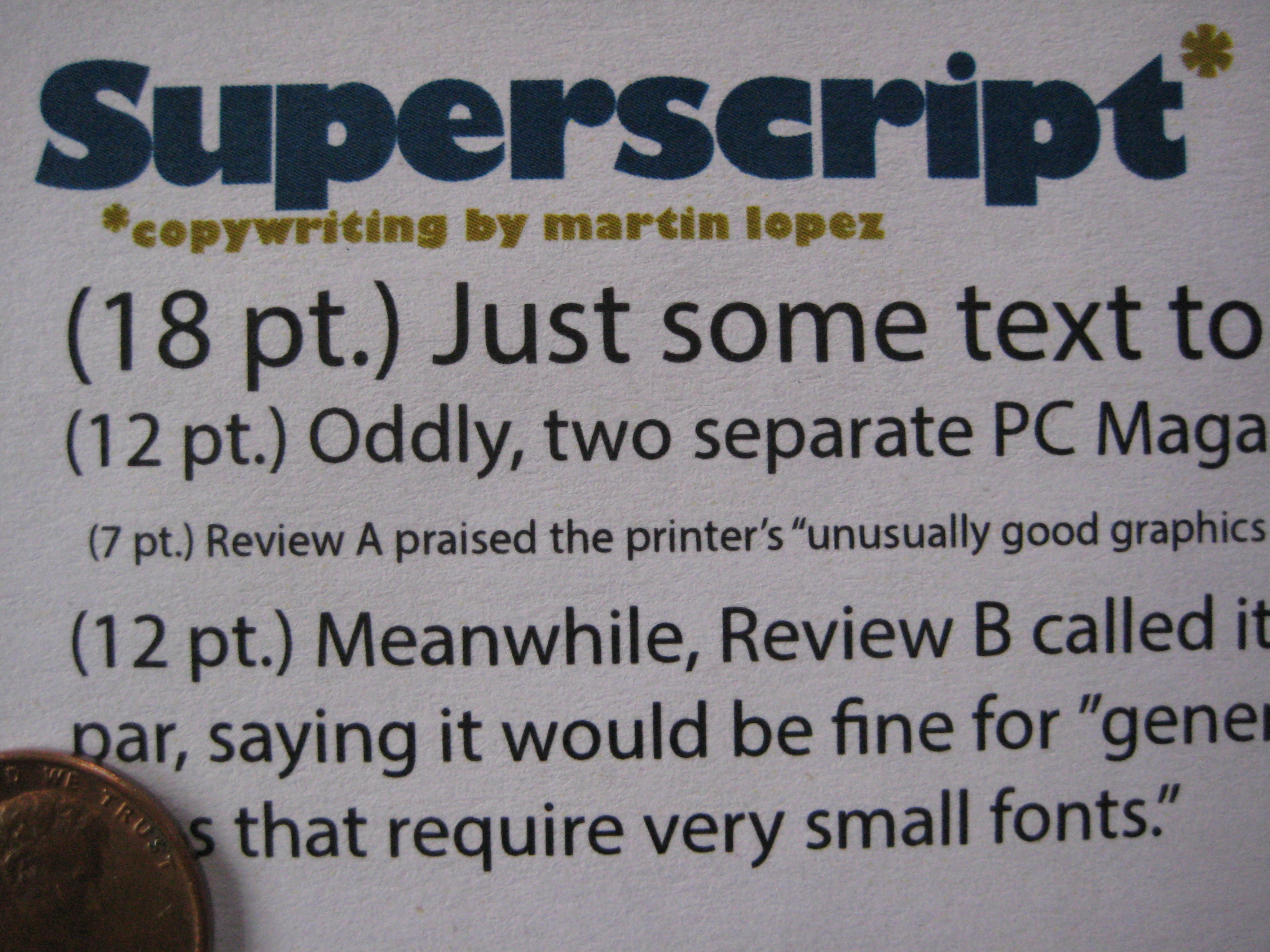
The photo above shows the excellent quality of the printer’s text output.  Oddly, two separate PC Magazine reviews of this printer clashed in their assessments of the printer’s text quality.  Review A praised the “unusually good graphics quality” and called its text output “outstandingly sharp.”  But Review B was lukewarm, calling it “a touch below par,” further specifying the text output to be fine for “general business use, though not for uses requiring very small fonts.”  As you can see in my photo, text looks great in even 7-pt. font size.

Good show, Dell!

Beer Roundup #7: Three Midwest English Barleywines

Food and Drink, Health

Whole Hog BW

To Buy or Not to Buy?
1 = horrible
2 = bad
3 = average
3.5 = good (many better beers out there; won’t buy this again)
4 = very good
4.5 = great
5 = rare best 

A Note on the Style:  English Barleywine

I prefer the malty “English” style barleywine over the hoppy “American” style.  All barleywines have a stiff malt backbone and generous sweetness, but the hop-forward American-style is often so bitter as to be indistinguishable from a high-alcohol double IPA.  Don’t get me wrong, some of my best friends are double IPA’s; I love me a double IPA when it’s got intense sweetness to offset the high IBU, like Bell’s Hopslam, Dogfish Head 120 Minute, or Founders Devil Dancer.

Despite my preference for the maltier English barleywine, it’s curious that I’ve found way more good American barley wines than English ones.  

How to explain this?  Is the English style BW less common in the US?  Not really.  Nearly every brewery that produces American barleywines also produces English ones.  The more likely explanation:  brewing a good English barleywine is more of a challenge because it doesn’t have the pronounced hops to balance the jacked-up sweetness.  Hence, many are sickeningly sweet, like Anchor Old Foghorn or Weyerbacher Blithering Idiot.

But all three specimens below are really good.

Stevens Point Barley Wine Style Ale (Whole Hog Series), Stevens Point Brewery

Rating:  4.44 / 5

12 oz. bottle (4-pk)  10.2% abv, 73 IBU.

From a very reasonably priced 4-pack ($7), the first sip has me totally psyched.

It’s not a great looking pour into a tulip glass, with barely a half-finger of white head atop the opaque, red-tinged, brown murk. Sticky lacing, with legs.

Very little in the aroma, probably just too cold. But bready, mildly floral, and of course malty in the nose, plus a grape-like, mildly acid wine character. Even after it warms, the nose remains reserved.

But in the mouth, now this is a provocative surprise. Stevens Point Brewery, for those of you not from Wisconsin, is an old-time adjunct-lager outfit, one of the oldest breweries in the US. My Midwest beer friends rarely say anything nice about SPB, so I wasn’t expecting a lot from this brew. But this is right up my alley. It’s a complex sweetness, like that of my two favorite English BW’s,  JW Lees Harvest Ale and Midnight Sun Arctic Devil. The grainy biscuit flavor is what backstops the sugar-sweetness, not any bitterness. Some will call this cloying. I love it. The sweetness rounds out with an estery, mossy oak. The butter/caramel is of the burnt variety. There’s milk and coconut, too.

The mild to moderate carbonation is a welcome cleanser and leavener of the oily-sticky feel.

I’ve gone back to Riley’s Wines and snatched up the last two 4-packs. One goes in the cellar, the other down my gullet!

Schell’s Barley Wine (Stag Series), August Schell Brewing

Rating:  4.46/5

On tap,  9.5% abv, 80 IBU.

I wasn’t expecting a whole lot, thinking of Schell as merely an adjunct-lager outfit. What an awesome surprise.

On tap at Mason Lounge (Madison).  In a snifter, a handsome pour, a clear coppery amber with a finger of white head and good retention and lacing.

The aroma is a bit reserved.  There’s a diacytel caramel, dried fruit, piney hops, and a bit of sharp ethanol.

Flavor in the mouth offers sweet caramel, stone fruit, a bit of citrus, and a floral hop bitterness on the back end.  Finishes sweet, with a hint of grassy hops.  Alcohol is hardly there.

Upland Winter Warmer, Upland Brewing

Rating:  4.05 / 5

On tap,  8.5% abv, 47 IBU.

Pours a hazy, ruddy copper, topped by a fluffy, two-finger head.

A seriously complex aroma, the sweet swirls with the hops.  The hops come as white grapefruit and a bit of must.  The lovely roasted caramel struggles to dominate and ultimately does.

In the mouth the malt/hop tension from the aroma comes down solidly on the side of the malt.  Simple syrup on the front end, sweet butter and bread in the middle, plus fig and cinnamon-raisin ice cream on the back of the tongue. Goes down with just a rumor of bitter hops.  

Feels like a much bigger beer than it is, chewy, even.

Not nearly as good as the other two in this review, but it gets points for availability, as it’s pretty common to find on tap in Midwest bars in the colder months.

How to Create Pre-Press PDF Files on a Budget

Entrepreneurship, Media
bus-card Adler GRACoL 2006

Need to order a commercial print job from an online printer, but don’t have Adobe Illustrator ($560)?  That’s my situation.  I’ve laid out a nice business card in PowerPoint (above), including the logo I also designed in PowerPoint.  But Powerpoint does not produce vector graphics.   Printers need vector graphics.  They also recommend submitting PDFs that have been “pre-flighted” using certain Adobe Acrobat presets, such as PDF/X-1a.

Huh?

That’s what I said.  What a bear it was to research this.  And for an additional challenge, I wanted to see if I could accomplish all this on a budget.  I assumed I could find some vector-graphics freeware with which to reproduce my designs.  But the question remained:  how to  save the graphics file in the “pre-flighted” PDF  format that online printers specify?

(In case you’re considering skipping the preflighting step, know that preflighting helps avoid printing glitches such as font substitutions and color alterations.)

Turns out, the key to all this is Adobe Acrobat.

Some of this terminology rang a bell, as I used to  own the Adobe Creative Suite (ACS; back then, $1500) when I ran my photo equipment rentals business.  ACS includes all the programs that produce file formats press printers require, such as .ID (InDesign), .EPS (Photoshop), .AI (Illustrator), and of course .PDF (Acrobat).  I needed all four of them to design marketing materials for that business.  But that was four years ago.  For the past four years I’ve been running my healthcare business, with no need for ACS, at all.  Now that I’m starting up my freelance commercial writing business, I’ve been crossing my fingers that I won’t need to spend $1000+ on design software.

The bottom line is, yes, one can create vector graphics using freeware/shareware (I used Inkscape to recreate my PowerPoint designs).  But for press printing, you need to create properly preflighted PDF’s.  For that, you must have Adobe Acrobat (price varies depending on version and how purchased, $100 – $429).

I verified this by downloading the free trial of Acrobat 11.  With Acrobat installed, the Acrobat Virtual Printer will appear in your list of devices and printers.  (This is in Windows, obviously.)  You simply design your graphics in your vector software, then follow these steps to preflight your PDF:

1) “Print” your file (That’s right, “print” not “save”!)
2) In the print dialog, select Adobe PDF as the “printer.”
3) Click preferences (or printer properties).
4) In Preferences, the “Default Settings” area offers a drop-down menu of PDF format presets.  For business card printing, Moo.com specifies the preset PDF/X-1a:2001.  For printing a brochure, Vistaprint.com requires PDF/a-1b:2005 (CMYK).
5) Click okay to get out of preferences.
6) Click print.  You’re done.

Now you have your vector-based,  properly pre-flighted  PDF to upload to your online printer.

Layering For Cold Weather: Technical Clothing Systems

Health

layers vert

Body moisture:  it’s your worst enemy when dressing for winter cold. You can be wind-proofed and layered to excess. But if your layers aren’t venting that moisture, the minute your body stops radiating heat, the moisture trapped in your clothing will chill you like a Perdue chicken.

My first winter riding around Madison, I used to either underdress and regret having ever left the house, or I’d over dress, get damp with perspiration, and experience bone-chilling, near-hypothermic misery. Now, after three winters in Madison, I’ve got my layering systems down to a science. I’ve kept notes in increments of 1° or 2°F, from 40°  down to -1° F, both for cycling and walking.  (See below.)

I’ve also filled out my wardrobe of base layers, mid-layers, and technical garments. I prefer Patagonia’s synthetic products. They insulate and vent moisture as well as anything out there.  As a bonus, many of their products are made from recycled plastic bottles.

Just a few things to emphasize before presenting my layering systems.

I pay little attention to my legs. While I do wear a wool insulating layer under my jeans or cords, I leave my legs exposed enough to prevent them from perspiring.  Why?  Because I don’t own any high quality pants that are BOTH windproof AND breathable. Wearing lesser quality windproof pants, my legs get sweaty and damp–the last thing I want when it’s cold. Pants made from Gore-Tex Pro are very expensive. I do own a Gore-Tex Pro jacket ($600), as venting the body core and arms is much more important than the legs. Plus, I bike 95% of my trips around town (no car!), and on my bike my legs pretty much take care of themselves in the warmth department.

However, crotch warmth needs to be accounted for. (Duh!) In conditions of bitter cold (5° F, or lower), I’ll stuff a pair of glove liners down my crotch, and we’re good!

The head is easy. Above 20° F, I wear my aero-helmet with a headband and cycling glasses. Below 20° F, I stay warm in a snowboard helmet. I switch to ski goggles below 12° F  or when it’s windy. The key to snow-helmet comfort is a venting system, one which can be opened or closed on-the-fly. The head generates serious BTUs of heat, so when the air is in the upper-teens, or when pedaling hard, opening the vents keeps one from overheating.

One last thing to note. I avoid windproof insulation under my hardshell. Windproof fleece, such as Patagonia R4 or soft shells with a Gore-Tex layer, work really well as outerwear; they’re my go-to outer layers in milder weather (>30° F). But when worn as an insulating layer, they don’t breathe well.  The consequence:  trapped moisture close to the body.

Below, I’ve condensed my notes (layers for cycling), in increments of approximately 5°. The notes specify weather conditions, time of day, and the success/failure of the layers listed. What’s not specified is the type of cycling: running errands around town, i.e., bicycle trips of 15 to 25 minutes.

Message me or leave a comment if you want the full version (or if you’d like my notes for walking/hiking, instead).

Abbreviations

“Cap” = Capilene (Patagonia)
“Cap 3 crew” = long sleeve crew-neck
“Alpine Jacket” = Patagonia Super Alpine Jacket
“Gore Softshell” = Gore Bike Windproof Softshell
“Hi-loft” = either Patagonia R3 jacket or North Face Radium jacket

35-deg, 11pm, 8mph wind
— perfectly layered, home from High Noon Saloon
Cap1 stretch SS
Cap1 stretch LS
wool LS crew
Cap4 Full Zip
Gore Bike softshell
Capilene scarf, took this off 1/2-way home
wool leggings + jeans
glacier gloves w/ med. liners
Keen hiking boots, Smartwool socks

29 – 30 deg, 12 pm, 9 mph wind
— a bit over-dressed to Co-op; the backpack added warmth
Note: started out the ride with good warmth built up
lighter wool leggings + cords
Capilene 2 LS (this should’ve been a Cap 1, and the Cap 4 could’ve
Cap 4 1/4-zip been Cap 3)
Alpine jacket (possibly could’ve been softshell)
med-weight balaclava (allowed you to leave jacket 1/2-zipped)
lobster gloves + best liners
Keen hiking boots, wool socks
aero helmet + headband, glasses
backpack

30 – 26 deg, 7 – 8 pm, 13 mph wind
— ears/jaws got cold on way home, to Co-op
Note: started out the ride with good warmth built up
lighter wool leggings + cords
Two-layer insulation
Capilene 1 SS (torso was perfect)
Cap 4 1/4-zip
Gore softshell
(would’ve been nice to have mid-weight balaclava for ride home at 26 deg)
lobster gloves + best liners
Keen hiking boots, wool socks
aero helmet + light-weight headband, glasses
backpack

25 deg, 5pm, 5 mph wind, 96% hum.
— just right to State Street, then to Co-op
— was a bit chilly when you had your Cap 4 part-way unzipped
lighter wool leggings + cords
cotton TCap 4 full-zip
Alpine Jacket
lobster gloves + best liners
Keen hiking boots, wool socks
aero helmet, headband
glasses
backpack

22 – 19 deg @ 3 – 5 pm, 13 mph wind
— to State St. (overheated on the way out!! Just right on way home.)
wool leggings + jeans
cotton SS
Smartwool top
North Face Hi-loft fleece
Alpine jacket
lobster gloves, windproof cyc. gloves
wool socks
Keen hiking boots
aero helmet w/ headband
Campy balaclava

17 – 20 deg, 7 – 8 pm, 14 mph wind
— to Co-op (maybe also to Trader Joe’s)
wool leggings + cords
Silk weight Cap SS
Cap2 crew [should’ve deleted this]
Cap4 Full Zip
Alpine hardshell
lobster gloves w/ liners (hands totally fine!)
snowboard helmet (Note: no headband — just tightened chin strap)
Keen hiking boots, Smartwool socks [toes a bit cold when riding hard]
(carried in bag: Capilene scarf, 2nd pr. glove liners, balaclava)

30 – 16 deg, 5 – 8 pm, 9 mph wind
— to Mason Lounge
Note:
lighter wool leggings + cords
Cap 1 SS
Cap 2 1/4-zip[carried Cap 4 full-zip for ride home]
Alpine jacket
med-weight balaclava
lobster gloves + best liners
Keen hiking boots, wool socks, light wool socks
snowboard helmet + glasses

14 deg, 6 pm, 9 mph wind
— to State St. then to Absolutely Art
— torso was too warm; removing the Cap 2 crew was good;
wool leggings + cords
Cap 1 stretch SS (this should’ve been LS, and no Cap 2 layer)
Cap 2 crew [took this off!!]
Cap 4 Full Zip
Alpine hardshell
ski gloves w/ windproof cyc. gloves + liners (hands good until very end)
snowboard helmet
Campy balaclava
Keen hiking boots, Smartwool socks + wool footies
— (feet good until way home from Jenifer St. Mkt.)
(carried in bag: Capilene scarf, 2nd pr. glove liners)

14 – 11 deg, 2 – 4 pm, 4 mph wind
— to Manona Terrace then to Jennifer St. Mkt.
— torso a bit too warm to Manona Terrace; legs/feet/hands perfect
— hands & feet freezing on way home from Jenifer St. Mkt.(probably b/c boots & gloves were a bit damp inside
— should’ve taken gloves off when browsing in stores)
wool leggings + cords
Cap 1 stretch SS
Cap 3 crew
Cap 4 Full Zip
Alpine hardshell
lobster gloves w/ windproof cyc. gloves (should’ve added liners later) snowboard helmet
Keen hiking boots, wool-blend socks (that’s all you had clean)
(carried in bag: Capilene scarf, 2nd pr. glove liners)

10 – 9 deg., 12-1p, 9 mph wind
— too warm!
lighter wool leggings + jeans
Cap 1 stretch SS
Cap 3 crew [had to remove this; should’ve been Cap 1 LS, could’ve rolled sleeves]
Cap 4 Full Zip
Alpine Jacket
heavier balaclava (Gore)
lobster gloves w/ best liners & light liners
Keen insulated boots, wool socks
snowboard helmet
Anon goggles
backpack

6 deg., 3p, 7 mph wind
— just right!
— to Co-op
Cap 1 stretch SS
Cap 2 quarter-zip
Hi-loft Full Zip (North Face)
Alpine Jacket
heavier balaclava (Gore)
lobster gloves w/ best liners and windproof cyc. gloves
Keen insulated boots, wool socks
snowboard helmet
Anon goggles
backpack

5 deg., 7p, 5 mph wind
— over-warm (had excess body-warmth built up + backpack, espec. on way home when backpack was heavy)
— to Co-op
>>>Next time, whenever you’ve got excess body-warmth built up, downgrade the Hi-loft layer to Cap 4
wool leggings + cords
silkweight Cap SS [could’ve deleted this b/c of the backpack]
Cap 3 quarter-zip
Hi-loft Full Zip (North Face) [Or, this could’ve been Cap 4
Alpine Jacket
— unzipped 1/4
— body a little too warm b/c of the backpack
heavier balaclava (Gore)
ski gloves w/ best liners and light liners
— hands were fine
Keen hiking boots, wool socks, lightweight wool socks
— feet perfectly fine
snowboard helmet (no headband)
Anon goggles
backpack

15 – 4 deg., 5p – 11p, 5 mph wind
— just right
— to Square to get bus to Greg’s; ride home from Greg’s
two silkweight Cap SS
Cap 4 full-zip
Hi-loft Full Zip (North Face)
Alpine Jacket
[most everything was comfortable, except my crotch!! Nearly frost bit. Should’ve stuffed lightweight glove liners down there.]
heavier balaclava (Gore)
lobster gloves w/ best liners and windproof cyc. gloves
— hands were fine (surprisingly! You were riding pretty hard the whole way home)
Keen insulated boots, heaviest wool socks
— feet perfectly fine
snowboard helmet (no headband)
Anon goggles
backpack

1 – 4 deg., 1 – 2p, 13 mph wind
— just right to doctors appt.
Cap 1 SSCap 1 LS (a bit too warm; rolled up sleeves on way home and was perfect)
Cap 4 full-zip
Hi-loft Full Zip (North Face)
Alpine Jacketcrotch: glove liners!!
heavier balaclava (Gore)
lobster gloves w/ best liners and windproof cyc. gloves
— hands were fine!
Keen insulated boots, wool socks
— feet perfectly fine
snowboard helmet
Anon goggles
backpack

-1 deg., 7p, 12 mph wind
— to Old Fashioned
lighter wool leggings + cords
Cap 1 stretch SS
Cap 3 1/4 zip
Hi-loft Full Zip (North Face)
Alpine Jacket
heavier balaclava (Gore)
lobster gloves w/ two pr. liners
Keen insulated boots, heavy duty wool socks
snowboard helmet (no headband)
Anon goggles
Cheesecloth? We Don’t Need No Stinkin’ Cheesecloth (To Drain Yogurt)

Food and Drink, Health
Coffee Maker yogurt

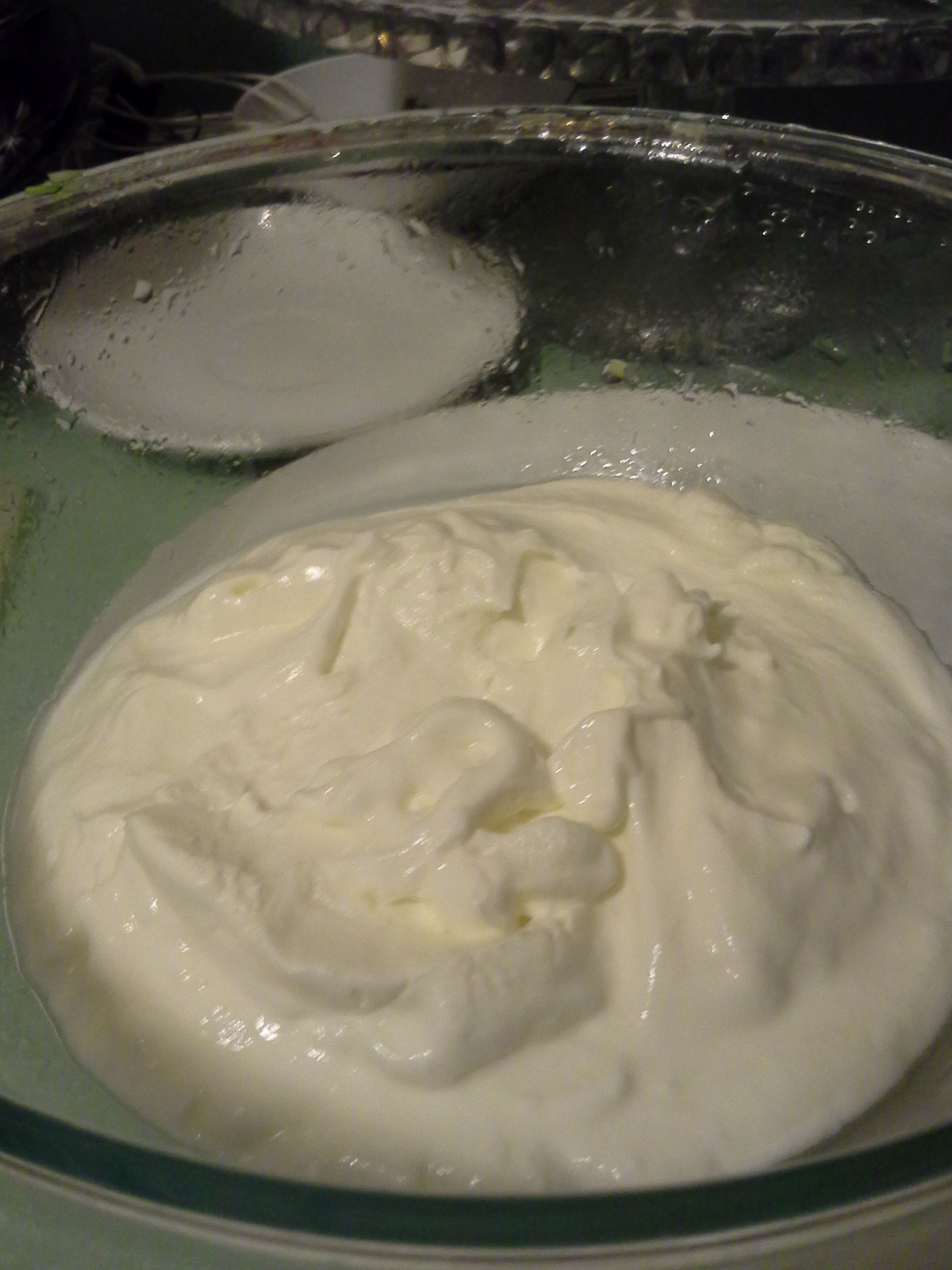
Coffee maker: the better yogurt strainer

The Better Way to Drain Yogurt

In the past when a recipe has called for strained yogurt, my wife and I have always gone with the conventional method, rigging up some version of the mouse-trap variety involving cheesecloth and gravity.  Hanging the yogurt-filled cheesecloth from a banana hook and draining the liquid into a bowl seems to perform well.  But it sure is a pain to set up.  The most commonly recommended method, fitting the cheesecloth inside a colander, simply doesn’t drain well; the larger surface area disperses the force of gravity, and the yogurt drains at a snail’s pace.

It finally occurred to us to try a Melitta coffee maker.  It sets up in a New York minute.  It drains the yogurt faster.  And it streamlines the task on the back end, as well:  after the yogurt fully drains, just tip the strained yogurt out of the filter, and finally squeeze what yogurt has stuck to the paper — like squeezing cake frosting from a pastry bag.  With cheesecloth, you’re left with a gooey mess that requires a spatula to salvage what you can, leaving wasted yogurt smeared in the woven fabric.

The finished product (drained yogurt)

The finished product (drained yogurt)

Beer Roundup #6: Three from My Cellar

Food and Drink

bourbon County brand Stout

THREE FROM MY CELLAR

To Buy or Not to Buy?

1 = horrible
2 = bad
3 = average
3.5 = good (many better beers out there; won’t buy this again)
4 = very good
4.5 = great
5 = rare best

A Note on My Cellaring Experience:

Two things had me feeling anxious about all the beer in my cellar.  First, my wife and I moved apartments last summer, and all the beer suffered a potentially bruising trip, jostled in the back of a moving van in hot weather.  Second, the storage unit in the basement of our new apartment building didn’t stay cool summer long.  In fact, for a period of at least a week or two, temps down there rose into the upper 70s if not lower 80s.  Thankfully, I didn’t detect any ill effects in my test samples at the end of the summer, nor in any of these three beers, here.

Brewer’s Reserve Bourbon Barrel Stout, Central Waters Brewing Co.

Rating:  4.88/5

12 oz. bottle (4-pk)  9.5% abv, 70 IBU.

This is the “2012” from my cellar, 13 months of aging.

Pours nearly perfectly black, with a rim of tanned leather at the 2mm of fast-dissipating khaki foam, plus bits of lacing and legs of running alcohol on the glass.

In the nose it’s an umami cocoa, first and foremost.  How choco-wonderous.  Then aromas of toast, burnt sugar, and bourbon, with hints of coffee and vanilla.  But one really has to work to get this complexity, as the aromas are whisper quiet.  (In fact, I’ve demoted the aroma score.)  The oak barrel is nice.  People talk about toasted coconut in the aroma, but that’s one note I’ve been unable to fathom.

In the mouth it’s a spumoni ice-cream cross of vanilla and chocolate.  It’s so good, one tends toward big mouthfuls to swish from side to side, front to back.  It’s nearly the vanilla heights of Southern Tier Creme Brulee Stout.  Perhaps it’s the aging, but the bourbon comes muted. (But my wife feels the bourbon is highly present.)  Roasty malt and charred oak walk with maple syrup, burnt caramel, and chewy biscuit.  Then the dried fruits come, some raisin or prune, and a candied cherry.  The merest suggestions of pine-hops and anise twist the thumbscrews of complexity.  It all washes down with coffee and cream on the backend.

Medium- to full-bodied, fabulously smooth, with a modest carbonation and a mild boozy heat.

Decadent, delicious.  It goes down fast.  Something this rich, you would expect it to be a one-and-done type of deal.  But I feel I could have several. Perhaps that’s the beauty of a sub-10% abv.

I’m just as impressed with this as I am BCBS or Mikkeler Black Hole or Midnight Sun Berserker.  It puts into perspective Tier 1 vs. Tier 2 imperial stouts.  Now relegated to Tier 2 are:  Stone Imperial Russian Stout, Founders Breakfast Stout, Southern Tier Mokah/Jahva, Weyerbacher Tiny, and Goose Island Big John.

Brewers Reserve Bourbon Barrel Barleywine Ale, Central Waters Brewing Co.

Rating:  5/5

12 oz. bottle (4-pk)  11.2% abv, — IBU.

This is a “2013”, so eleven months of aging.

A clear reddish-caramel in a tulip glass, with almost no head, even after an moderately aggressive pour (hence the 11.5% alcohol).  Lacing is sparse, but with serious stick-to-it-iveness and dripping legs down the glass.

How I miss this aroma.  Brings me right back to snowy April of last year.  Bourbon in the nose seems nicely muted compared to my memory of it.  I remember the bourbon being more pronounced in the aroma.  The vanilla, too.  Oak and char and melted butter bring further bouts of nostalgia.  Brown sugar and raisin, too.  Yeah, baby.

In the mouth the aging is instantly evident, with the hop bitterness knocked way back (though there’s still a ghostly, earthy pine bitterness on the back-end, for sure).  Pushing against the simple-syrup sweetness, the quiet hops present about an 80 or so IBU.  The flavor is wonderfully round:  soft sugar cookie, ice-cream-caramel swirl, fig and prune, then the bourbon.  I put more in the glass, and pie crust fills my nostrils.  Plus Juicy Fruit Gum and marshmallow.  It’s massively toffee sweet, and yet the mild hops and tannins from the oak–not to mention the brightness of the still-respectable boozey ABV–bring balance.  It drinks like Dogfish Head 120 Minute.

Despite a fairly significant carbonation, the smoothness makes me want to cry.  It gives the feel of a super-syrupy moscato di asti.  Definitely more an English Barleywine profile, at least after the aging.  How astonishing to experience true beer nirvana.  I feel like I did two years ago sipping a JW Lees Harvest Ale for the first time.

CW’s detractors denounce them as a one-trick (bourbon barrel) pony.  Not only is this wrong (duh, Illumination?  Exodus?  La Petite Mort?).  But even if true, this is bourbon-barrel aging at its very best.

Bourbon County Brand Stout, Goose Island Beer Co.

Rating:  5/5

12 oz. bottle (4-pk)  15% abv, — IBU.

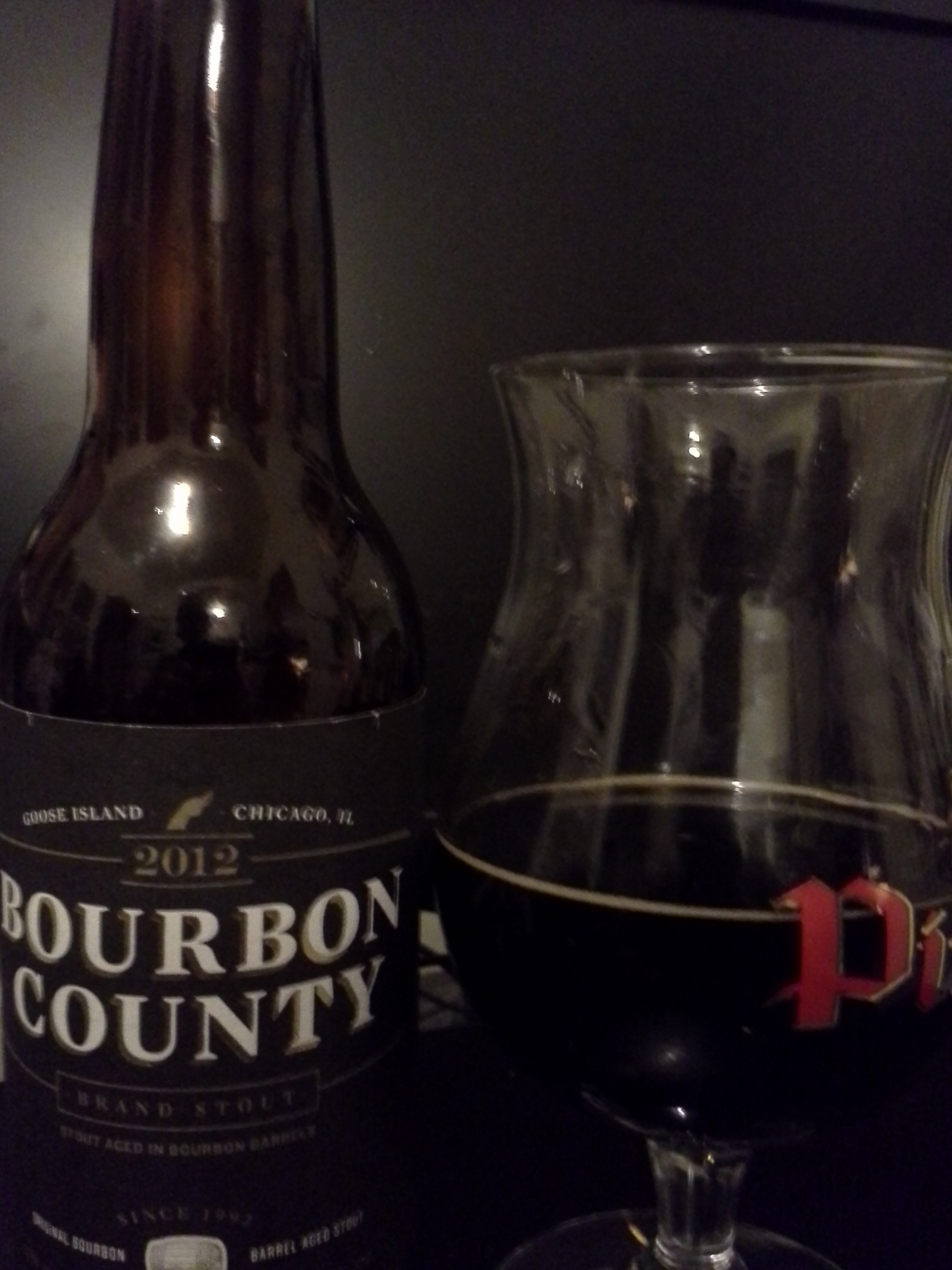
This is a 2012 BCBS, so 18 months-old.  It’s much smoother, sweeter, with less astringency than it had last year.  There’s still almost no head to speak of, poured into a snifter.  It looks like soy sauce with some floating bubbles.  I might have said it also smelled of soy sauce, or at least chilled soy sauce.  Then I realized the aroma was tart plum, fruitcake, and moist spice cake.  Wow.  What eye-popping clarity in this complexity.  I’m beside myself (even if my less craft-beer-minded guests are non-plussed) with how amazing an aged BCBS is.  The most astonishing surprise here is a distinct peppermint stick aroma.

Can you say “Port Wine”?  My wife just asked me what I would think if tasting this without knowing anything of its provenance or vintage.  I tried to imagine it, and I think, yep, port wine.  Charred nuts, dried fig, and burnt raisins make for a thematic, seasonal flavor–it’s that fruitcake flavor from the aroma.  The bitterness resembles molasses more than it does hops.  Balance comes from the spicy alcohol.

Creamy and thick on the palate.

I can only say thank God I’ve got four more 4-packs in the cellar.  This is the shiznet, by all standards.